



As we witness Bitcoin’s price fluctuating dramatically, these movements unveil deeper economic indicators that impact investors and financial markets. Understanding these shifts is crucial as they reflect broader economic uncertainties and potential shifts in the crypto economy.
Understanding the Current Value of Bitcoin’s Price
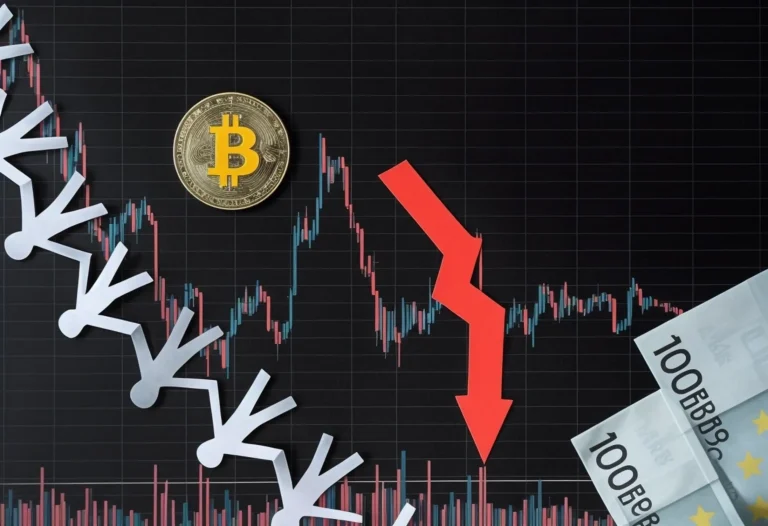
Bitcoin’s recent price drop has significant implications for investors closely monitoring the market dynamics. Recently, Bitcoin fell below $67,000, not only marking a downward trend but indicating a close to 50% decline since it peaked at over $126,000 in October 2025. This drastic decrease has triggered concerns among investors about the viability of cryptocurrencies as reliable assets in turbulent financial climates.
In the current environment, historical comparisons are essential. Analysts note that similar patterns have been observed in the past where significant price declines often correlate with increased volatility in various asset classes. For example, following previous price drop events, there has been a recurrent theme of public skepticism regarding cryptocurrency investments. According to recent reports, this current slump in Bitcoin isn’t isolated; it reflects broader economic trends and changing investor sentiments.
Several leading financial experts have taken to social media to express their views, claiming that prevailing economic conditions could amplify the impact of Bitcoin’s price fluctuations on investor confidence. For instance, experts emphasize the importance of analyzing market behavior rather than focusing solely on Bitcoin’s price itself.
The Impact of Regulatory Concerns on Bitcoin Trends
Government regulations have become a significant concern for Bitcoin’s price dynamics. Recent discussions among lawmakers indicate a growing interest in imposing stricter controls and oversight on cryptocurrencies. For instance, certain factions within the government have raised concerns about the potential conflicts of interest in the crypto space and the need for definitive regulation as noted in a report.
Historically, periods of regulatory uncertainty have coincided with downturns in Bitcoin’s market performance. Notably, the sell-off in recent months correlates with heightened calls for regulation and government intervention. When the industry faces uncertainty, investors often pull back, leading to significant devaluation of assets. The response of Bitcoin to regulatory news reinforces the pivotal connection between government policy and market behavior.
Economic Indicators Revealed by Bitcoin’s Volatility
The volatility in Bitcoin’s market performance serves as a window into several unforeseen economic indicators. For instance, the mass withdrawal of investments from Bitcoin comes amid increased fears of economic instability and traditional market performance issues. As prices fluctuate, they demonstrate not only the crypto community’s confidence but also broader sentiment regarding economic health.
Fluctuations in Bitcoin often point to shifts in investor confidence towards more extensive financial markets. A decline in Bitcoin can suggest a broader investors’ hesitance, ultimately affecting market dynamics. Factors such as interest rates, employment statistics, and inflation fears intertwine with cryptocurrency markets, making Bitcoin a mirror to reflect wider economic sentiments according to analysts.
The Ripple Effect on the Crypto Economy
Bitcoin’s decline has a direct ripple effect on other cryptocurrencies and the total crypto market. A significant downturn can lead to a domino effect, where other digital assets also witness significant losses. For example, following Bitcoin’s price drop, the overall crypto market reportedly lost approximately $2 trillion in value since early October 2025, reflecting how tightly correlated these digital assets are.
Companies heavily invested in Bitcoin have suffered tremendously during this downturn, as their stock prices plummeted. This decline has raised concerns over potential bankruptcies and further market contraction within the crypto economy. The sharp decline in Bitcoin, as evidenced by various market reports, underlines the need for better diversification strategies among cryptocurrency investors.

Financial Markets Responding to Bitcoin’s Downtrend
The correlation between Bitcoin’s price movements and stock market performance is an essential dynamic to consider. Many investors perceive Bitcoin as either a risk-on or risk-off asset, often leading to significant sentiment shifts in traditional markets. As Bitcoin trends continue to evolve, they influence investors’ perceptions of traditional asset classes like stocks and bonds.
For instance, the recent downturn in Bitcoin has caused the tech-heavy Nasdaq index to drop by 1.5%, illustrating how cryptocurrency trends sway broader financial markets. Investors are now questioning the safety and stability of Bitcoin alongside conventional investments as noted in recent analysis. This shift in sentiment has broader implications, raising crucial questions about asset allocation and risk management in volatile markets.
Future Considerations for Investors in Bitcoin and Beyond
Navigating investments in the current eco-friendly landscape of cryptocurrency requires adaptable strategies. Investors should consider exploring various avenues within and outside the crypto space to mitigate risks. Essential to this approach is financial education, which empowers individuals to make informed decisions during downturns.
Employing diversification strategies—including holding traditional assets alongside cryptocurrencies—can help manage risks associated with Bitcoin and other digital currencies. As the landscape continues to evolve, being attentive to market signals and regulations will be vital for future investment decisions.
In summary, Bitcoin’s price fluctuations reveal not only individual asset performance but broader economic indicators severe enough to shake investor confidence across the financial landscape. Understanding these connections and employing strategic risk management will be essential in navigating the unpredictable waters of both the crypto economy and traditional financial markets.